Media
- Home
- Details


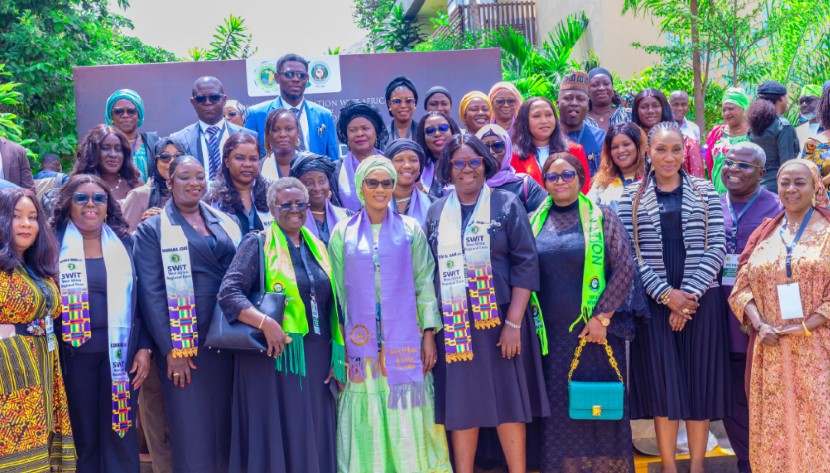
Society of Women in Taxation West Africa has stated that ensuring dignity, fairness, and respect for women traders is not only a matter of economic justice but also a pathway to sustainable regional growth and integration.
The Society with support from the ECOWAS Commission, held a High-Level Stakeholders Dialogue to address Taxation Challenges for women cross-border trading on Implications for the African Continental Free Trade Area.
The Coordinating Secretary of the Tax Appeal Tribunal, Ms Anita Erinne, anchored on the Sub-theme, Harmonisation of Taxation and Tariffs for Ease of Doing Business for Women Cross-border Traders in the ECOWAS Region.
The dialogue engaged in robust discussions, sharing country-level insights and recommendations for strengthening the regional trade environment. Emphasis was placed on harmonisation, capacity-building for women traders, and ensuring their voices are represented in tax policy formulation.
Reminiscing on the challenges facing the women, the panel identified that complicated tax regimes, Inconsistent tariff structures, cumbersome customs procedures, Informal levies and harassment at borders hinder the growth and competitiveness of women-led businesses.
Furthermore, the dialogue suggested that harmonising taxation and tariffs is a critical step to enhance the ease of doing business for women traders, empower them economically, and advance ECOWAS’s vision of regional integration.
The dialogue also brought together experts to address the intersection of international trade, tax policy, and gender economics. Despite regional agreements designed to facilitate trade, women traders continue to face significant barriers; simplifying and aligning tax and tariff rules is essential to their success.
The dialogue emphasised that the lack of harmonisation creates a complex, unpredictable, and expensive environment for traders, resulting in double or even triple taxation, complex documentation, and limited awareness of trade protocols.
The Panel averred that taxation variabilities, customs bottlenecks, and bureaucratic delays persist disproportionately affecting women, who typically operate on a smaller scale, trade in perishable goods, and have less access to information and resources; addressing these barriers is essential to inclusive trade development.
The panellists engaged in robust discussions, sharing country-level insights and recommendations for strengthening the regional trade environment. Emphasis was placed on harmonisation, capacity-building for women traders, and ensuring their voices are represented in tax policy formulation.
This dialogue was timely, coming at a period when ECOWAS is seeking deeper integration and inclusivity. The discussions highlighted that empowering women in trade requires more than diagnosing problems—it demands clear, actionable solutions that simplify taxation, align tariffs, and remove systemic barriers.
Ensuring dignity, fairness, and respect for women traders is not only a matter of economic justice but also a pathway to sustainable regional growth and integration.
It is important to state that the Society of Women in Taxation (SWIT) started in Nigeria when it was formally inaugurated on 7th May 2010 as an arm of the Chartered Institute of Taxation of Nigeria (CITN), to serve as an umbrella body of the female members of the institute and to meet the yearnings and aspirations of women, for recognition as a force to reckon with on tax policy issues. It is also to serve as a forum for the promotion of the socio-economic development of women.
The panellists include the Gambia Revenue Authority, Ghana Revenue Authority, the Federal Inland Revenue Service, the Chartered Institute of Taxation Ghana, the Chartered Institute of Taxation Nigeria, and the Chartered Institute of Taxation Senegal.

